Project Overview
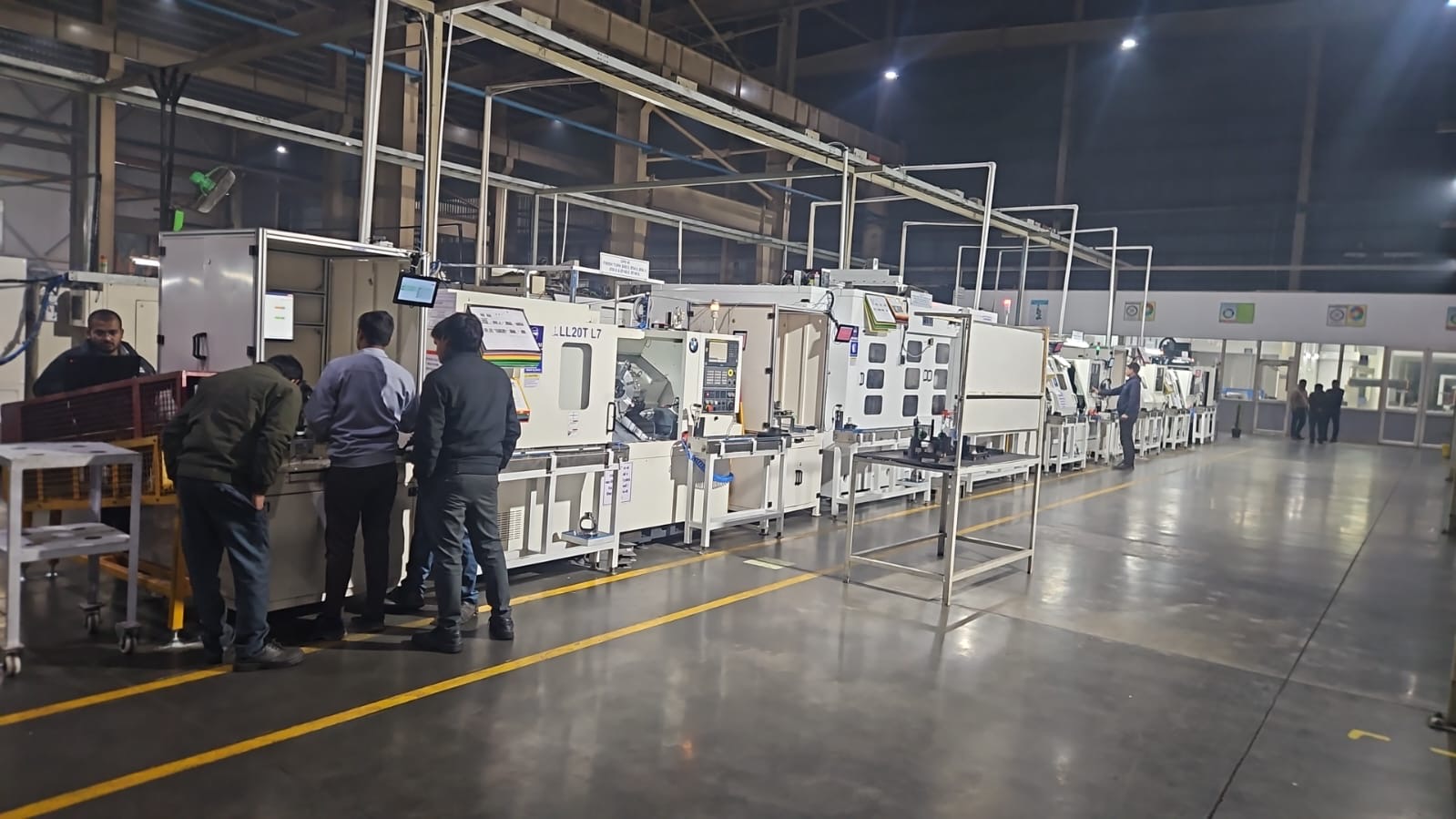
Rico Auto, a global Tier-1 partner for BMW, faced a critical mandate for its Gen-6 high-volume export lines. In the high-precision automotive world, passing an OEM audit is not just about having data; it’s about proving a “Digital Thread”—a seamless link between every machining parameter and the final dispatched part.
Business Challenge
Before Hiotron’s intervention, traceability relied on a “Fragmented Reality”:
- Data Silos: Important information was spread across paper records, machine PLC data, and manual quality logs. Because the data was stored in different places, it was difficult to get one clear view of operations.
- Time-Consuming Audit Preparation: Preparing for BMW audits took several days because teams had to manually collect and match records from different sources. This made the audit process slow, stressful, and resource-heavy.
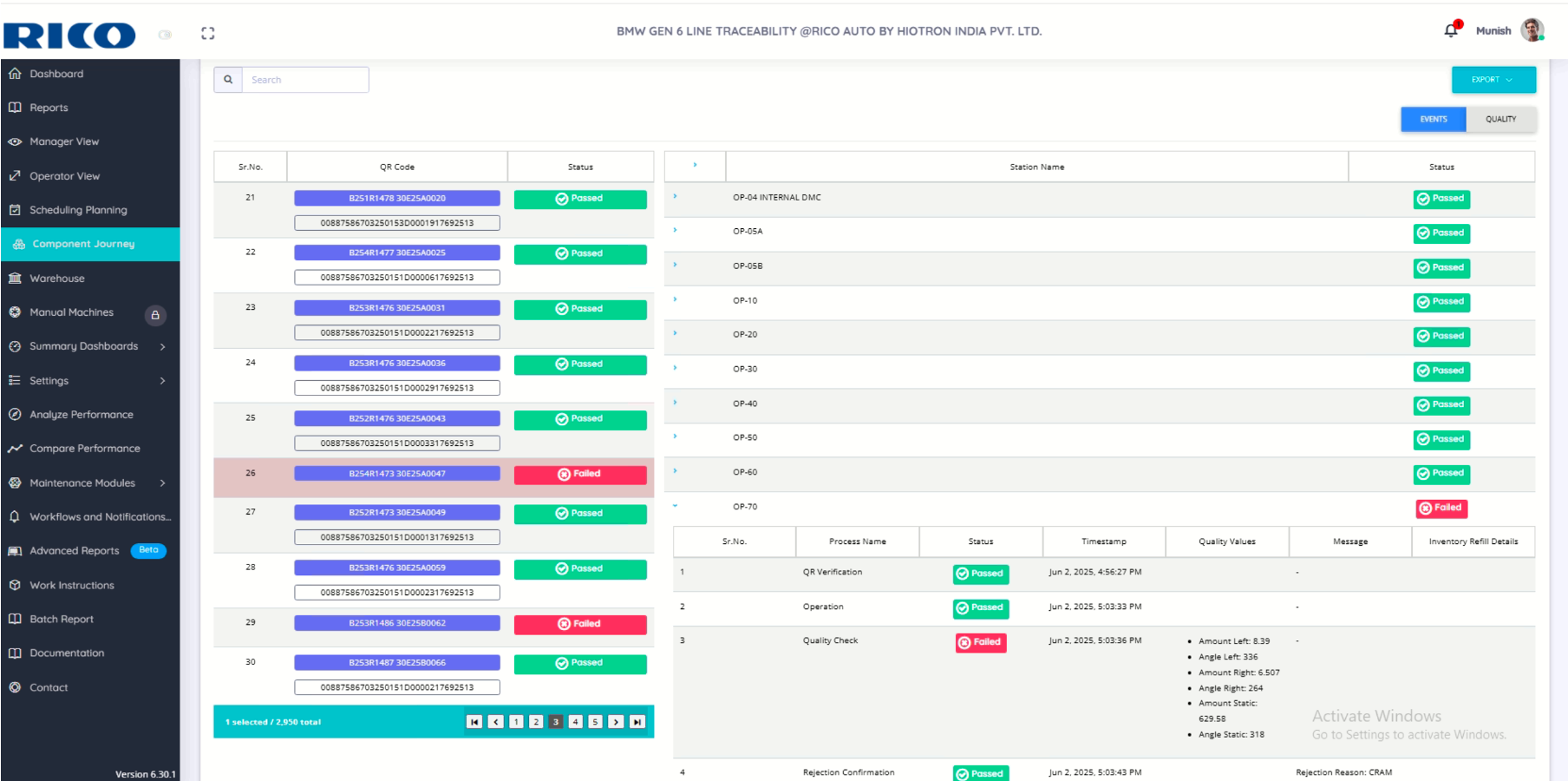
- Risk of Wrong Parts Moving Forward: Without real-time quality checks and interlocks, there was always a chance that a non-compliant part could move to the next stage because of human error. This created a serious quality and compliance risk.
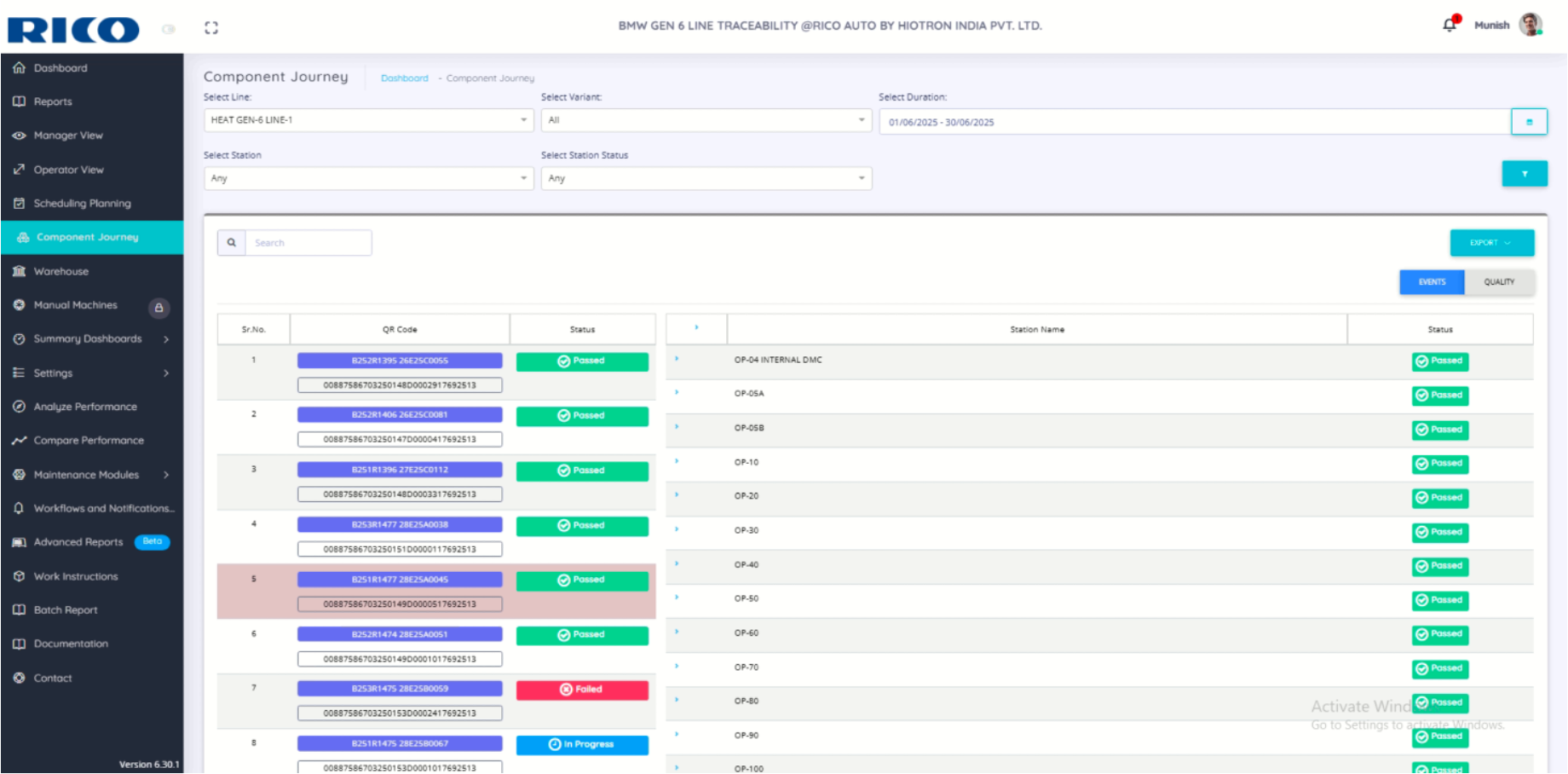
- Limited Real-Time Traceability: Operators, supervisors & managers did not have instant visibility into the journey of each component. As a result, tracking part status and identifying issues quickly was difficult.
- Weak Process Discipline at Scale: Quality teams needed faster access to OK and NG status linked to each uniquely serialized part. Management also needed a reliable digital audit trail that could be reviewed easily, without depending on manual records. The plant required stronger process discipline to ensure that non-compliant parts were stopped before moving ahead.
Hiotron Solution
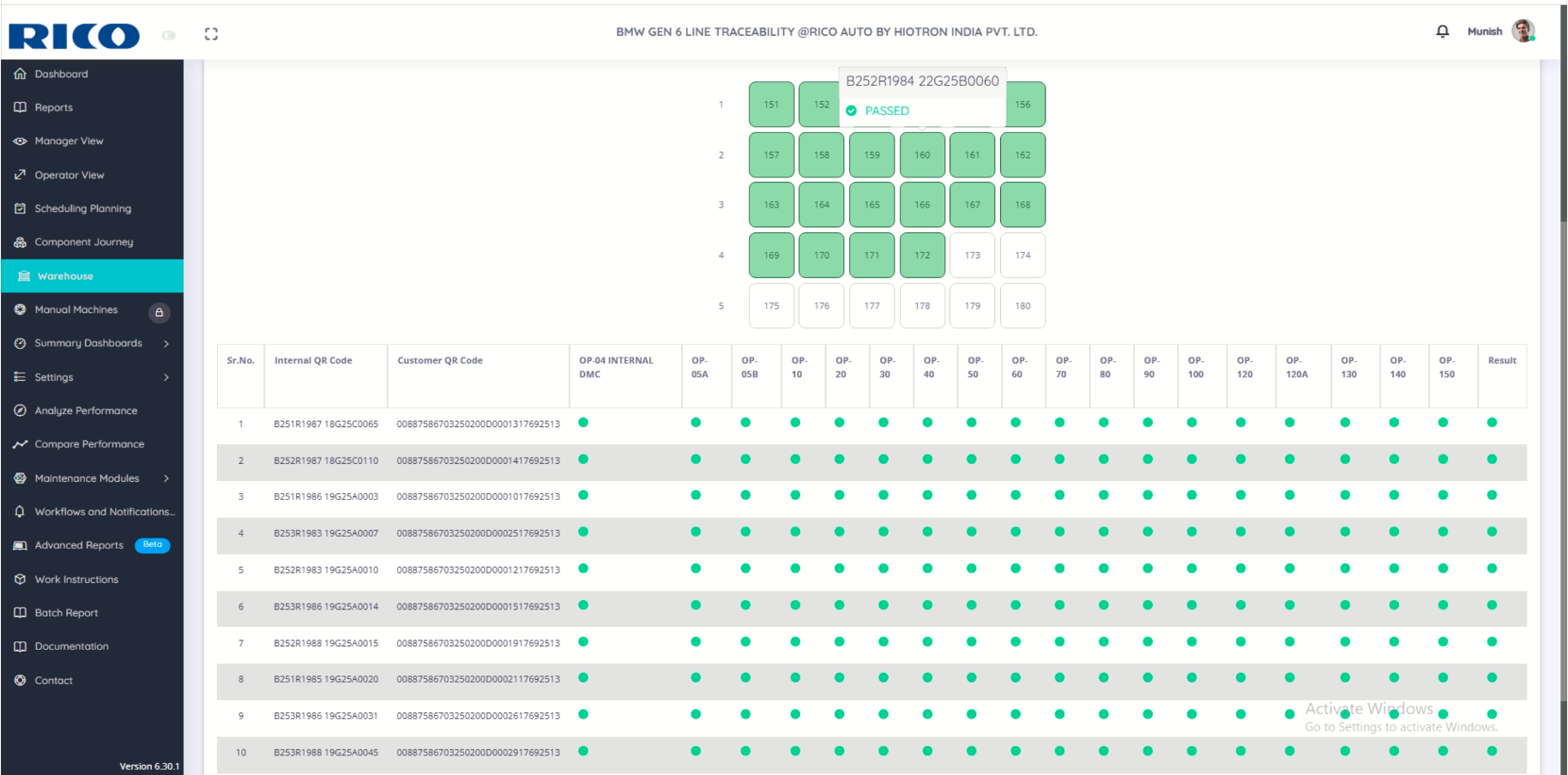
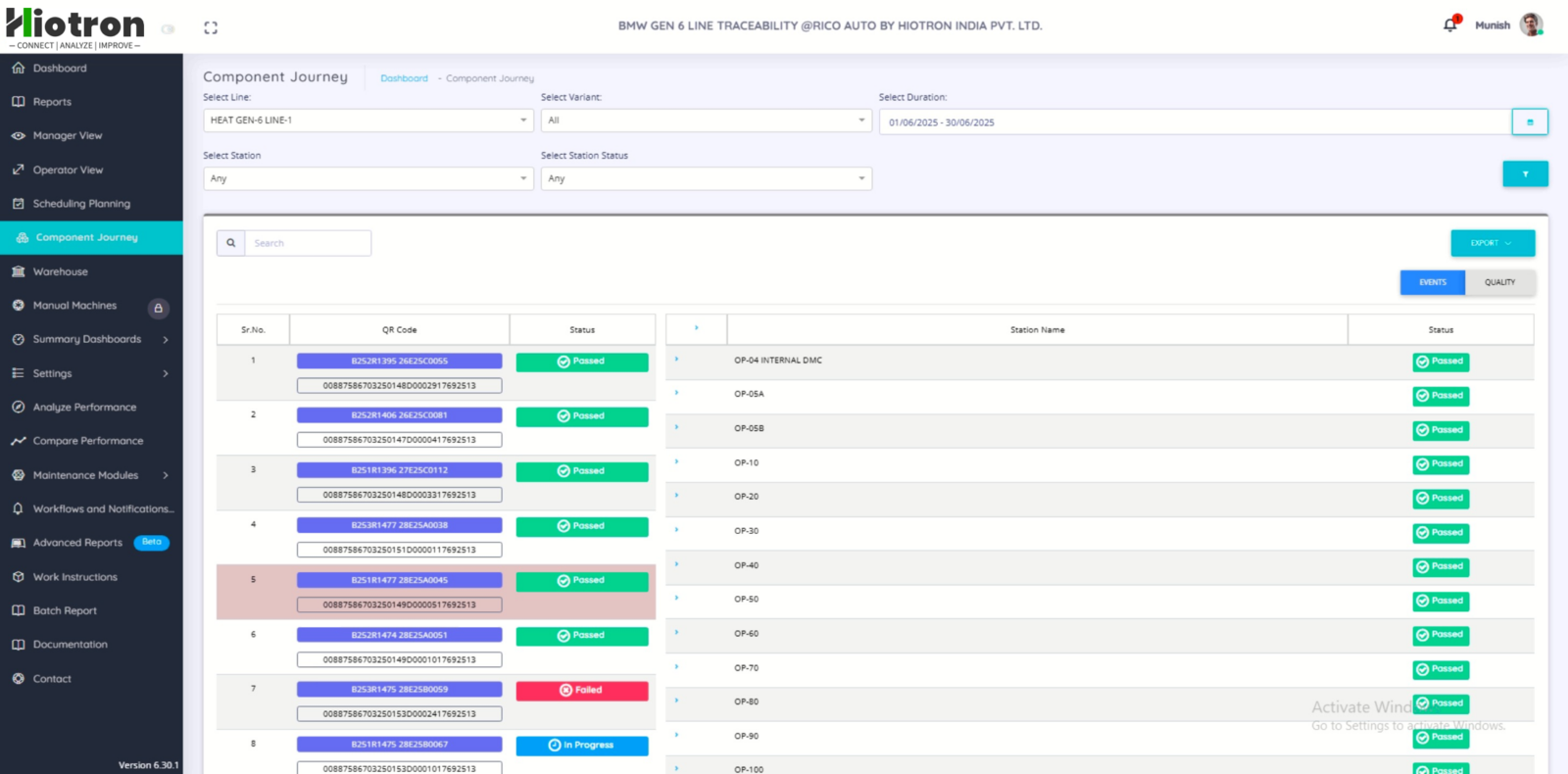
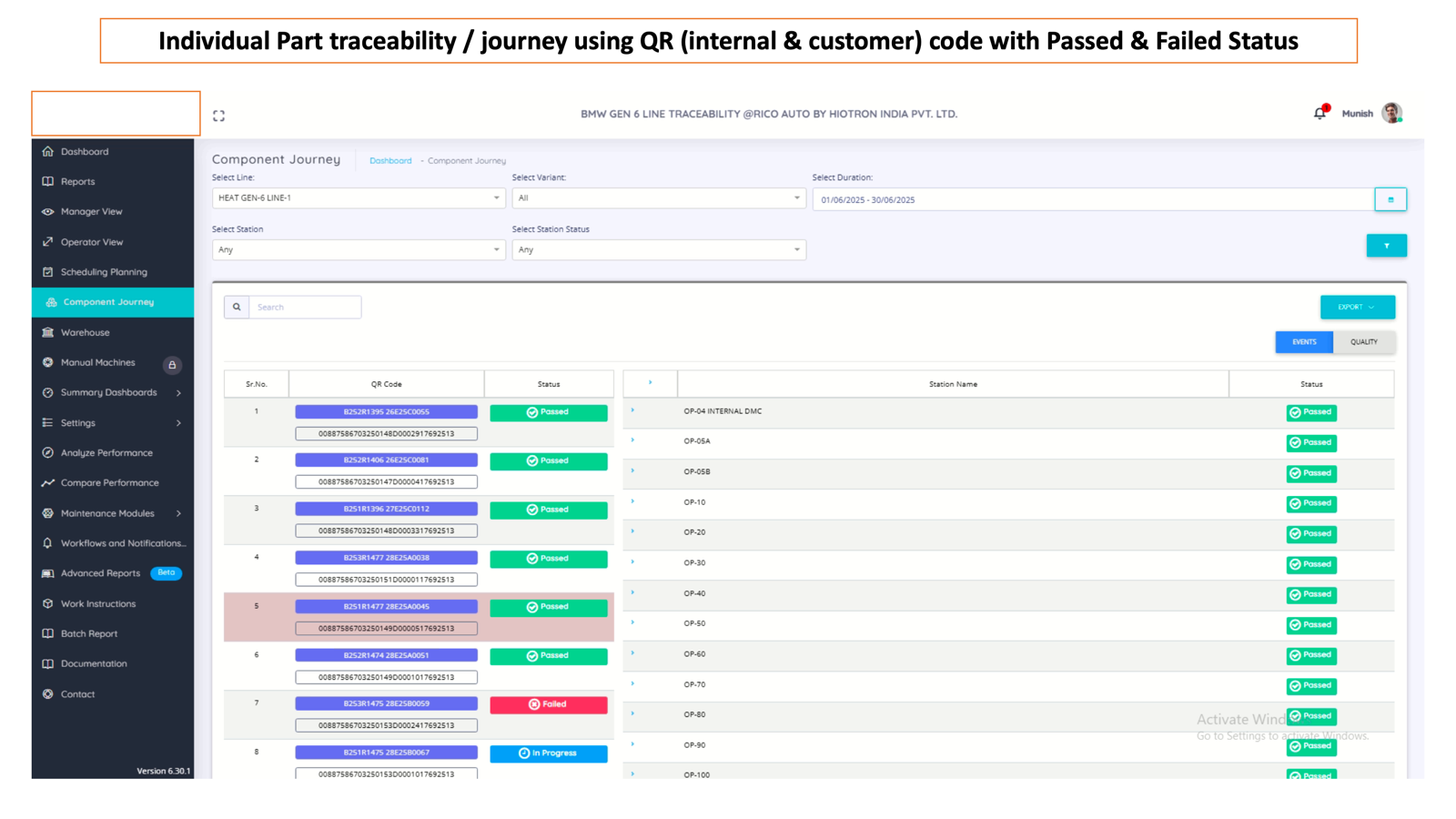
Hiotron implemented an end-to-end QR and DPM scanner based part traceability solution tailored for the BMW Gen-6 export lines. Each component was assigned a unique identity, and station-level events were captured against that identity throughout the production journey.
Business Impact
- 100% part traceability: Each serialized part can now be traced from source material through final process completion.
- Zero defect escapes: NG parts are held at source instead of progressing downstream.
- Audit-ready records: Customer and internal teams can retrieve part history instantly during audits and investigations.
- Lower manual effort: Digital tracking reduced dependence on paper-based traceability and manual record reconciliation.