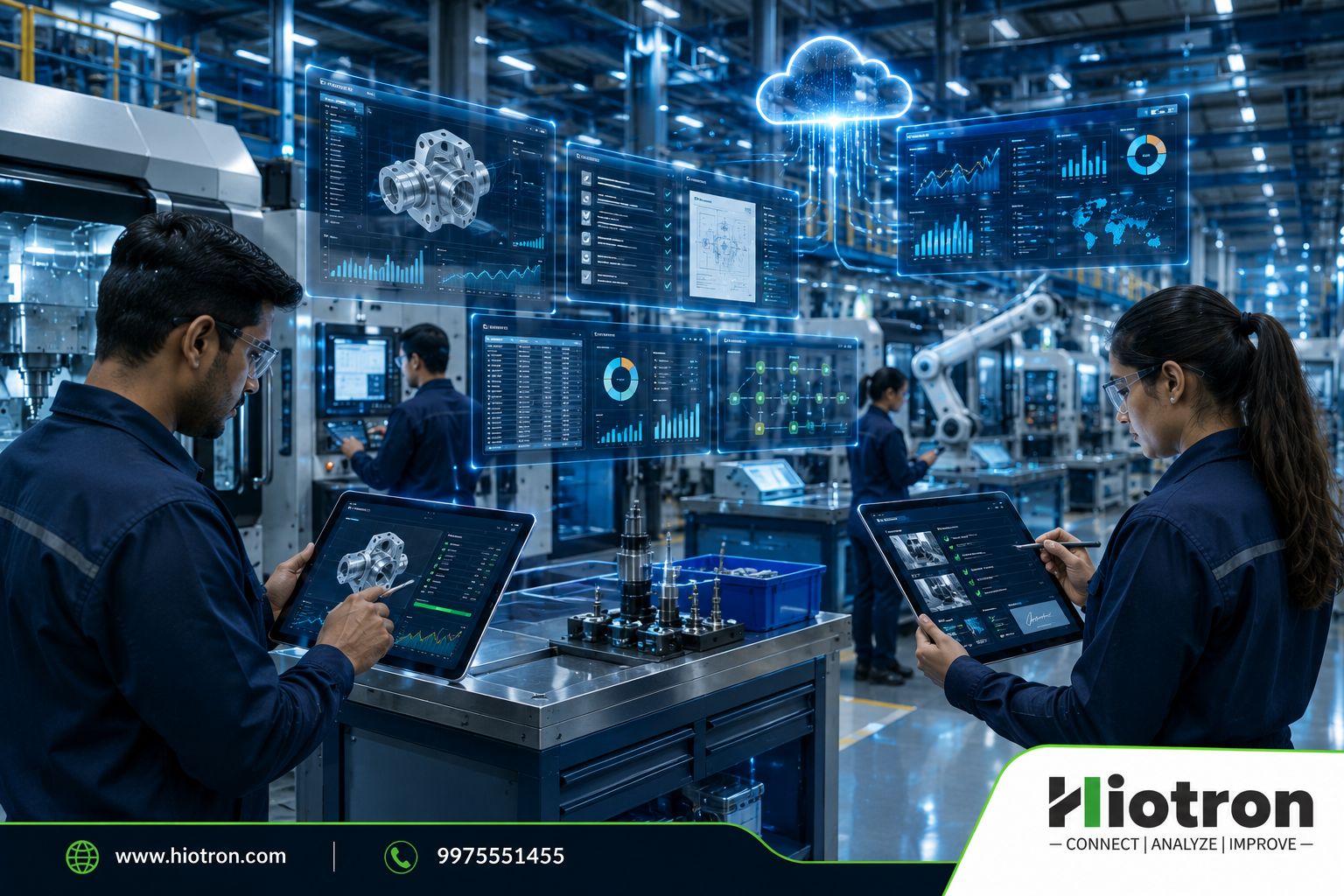
In modern manufacturing, documents are far more than files. SOPs, work instructions, route cards, inspection records and maintenance checklists are the blueprints of productivity, quality, compliance and traceability — and every one of them shapes both how efficiently the shop floor runs and how accurate your reporting is.
Yet most plants are still working around the same paper-shaped problems.
The cost of paper on the shop floor
- Outdated SOPs circulating on the floor, causing confusion about which revision is current.
- Manual route cards and checklists that slow production and have to be transcribed later.
- Time lost searching for the right document at the moment it is needed.
- Cumbersome approvals and version control that nobody can reconstruct after the fact.
- Audit preparation and report generation consuming days rather than minutes.
- Disconnected systems that isolate manufacturing data from the documents describing it.
None of these are dramatic failures. They are small, daily frictions — which is exactly why they persist, and why they are expensive.
Six ways a Digital Document Management System changes this
1. One source of truth
Every operator and team member accesses the latest approved SOP and work instruction — not the copy printed three revisions ago and still pinned near the machine.
2. Faster audits and automated reporting
Organised digital records turn audit preparation from a scramble into a query. Comprehensive reports are generated in minutes rather than days.
3. Instant information access
Operators and supervisors get the document they need exactly when and where they need it, at the machine rather than back in the office.
4. Process compliance built in
Documents and work instructions link directly to production processes, machines, products and operations — so compliance is a property of the workflow, not a separate exercise.
5. Controlled access and approvals
Who can view, edit, review and approve each document is explicit, with complete version control behind it. Approvals stop being email threads.
6. Connected manufacturing data
Digital documents integrate with production, quality, maintenance, traceability and machine data, creating a single digital thread across the shop floor.
Digitising knowledge, not just machines
The future of manufacturing is not only about instrumenting equipment. It is about digitising the knowledge, processes and documents that drive productivity — and that supply the data intelligent reporting depends on.
At Hiotron India Pvt. Ltd., FactoryMetrics brings machines, people, processes, production data and digital documentation together into one connected manufacturing ecosystem.
Because when the right information reaches the right person at the right time, manufacturing becomes faster, more consistent and more intelligent.
Talk to us
If document control is slowing your plant down — or your last audit took longer than it should have — we would be glad to walk you through how FactoryMetrics handles it. Get in touch.