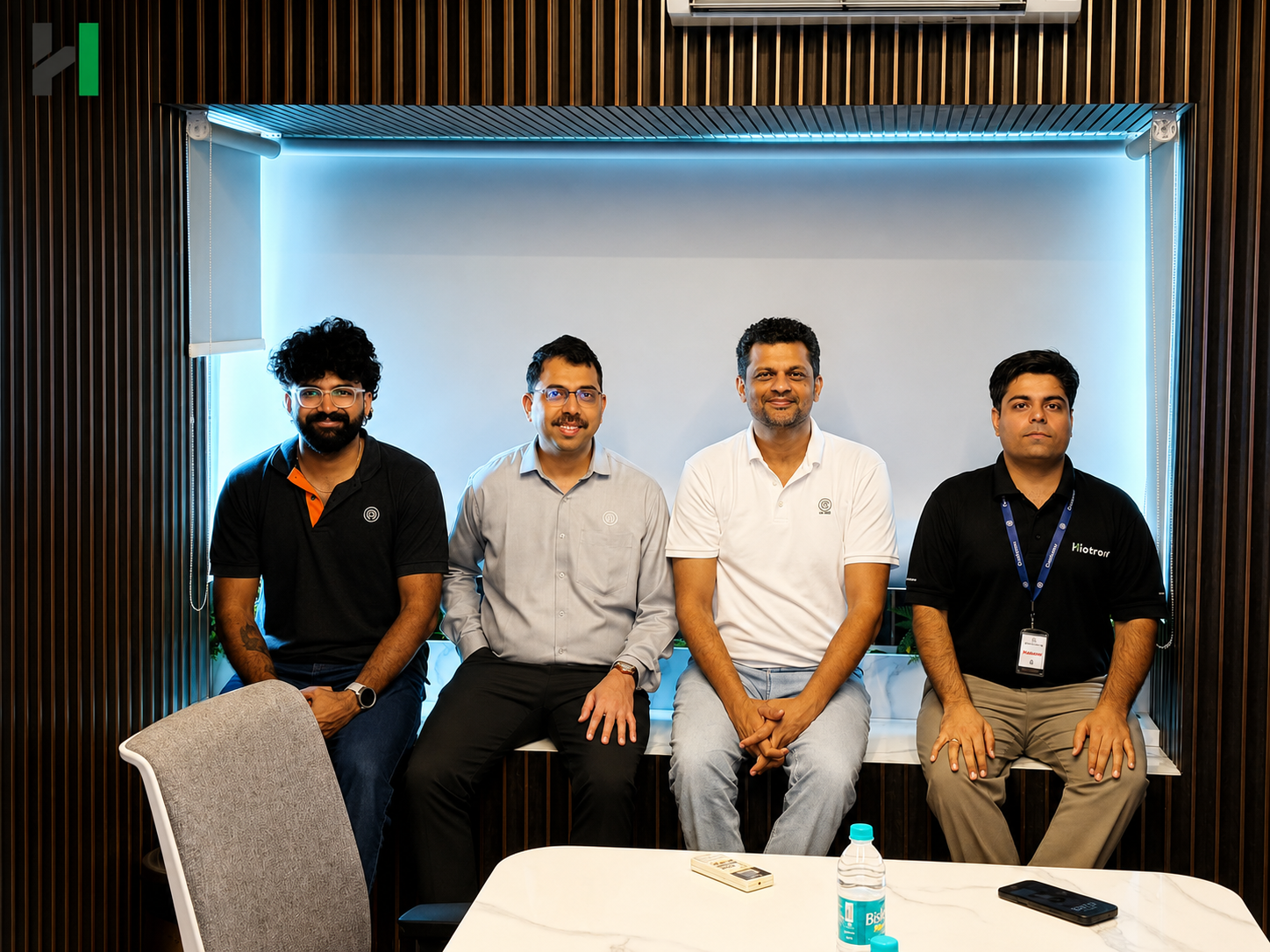
JJG Aero has expanded its partnership with Hiotron by adding more than 150 machines to its existing FactoryMetrics deployment, taking the connected manufacturing footprint to 350 machines company-wide. The latest phase also introduces Digital Route Cards, Advanced Planning and simulation capabilities designed to connect real-time shopfloor execution with aerospace manufacturing planning.
JJG Aero and Hiotron Take the Next Step in Connected Manufacturing
Manufacturing digitalisation often starts with machine connectivity.
The next challenge is making that connected data useful for planning, execution and decision-making.
That is the direction of the latest collaboration between JJG Aero and Hiotron.
JJG Aero has expanded its FactoryMetrics deployment from more than 200 connected machines to 350 machines across the company. Alongside this expansion, JJG Aero has moved into a more advanced phase of digital manufacturing with the adoption of Digital Route Cards and Advanced Planning, with the initiative approved by its OEM customers.
The development represents an important shift from simply monitoring manufacturing activity to connecting planning, production execution and real-time shopfloor information.
From 200 to 350 Connected Machines
The addition of more than 150 machines expands the FactoryMetrics footprint across JJG Aero’s manufacturing operations.
The connected environment includes automated machines as well as manual and activity-based manufacturing stations, creating a broader digital view of production.
Machine connectivity provides the foundation for collecting manufacturing information in real time. However, the greater value comes when this information can be connected with production plans, manufacturing routes, capacity and delivery requirements.
This is where the latest phase of the JJG Aero and Hiotron partnership becomes particularly significant.
Why Machine Connectivity Alone Is Not Enough
Many factories have already invested in Industry 4.0 technologies, including IoT connectivity, machine monitoring, ERP integration and production dashboards.
These systems can provide valuable visibility.
However, a connected factory can still face an important gap:
The ERP knows what is planned. The machines know what is happening. But are the two continuously working together?
In a machining environment, conditions can change throughout the day.
Machine availability can change.
Production can run ahead or behind schedule.
Bottlenecks can emerge.
Orders can change in priority.
Actual cycle times can differ from planned values.
Traditional integration can move information between systems, but moving information is not the same as using that information to make real-time manufacturing decisions.
The JJG Aero implementation is designed to address this gap by bringing planning and shopfloor execution closer together.
Digital Route Cards for Aerospace Manufacturing
A route card is a critical part of aerospace manufacturing.
It defines the sequence of operations that a component must pass through and provides a record of manufacturing activities, inspections and approvals associated with the part.
Traditionally, this information can be managed within an ERP or other enterprise systems.
With Digital Route Cards, the manufacturing route becomes part of a connected operational environment.
The objective is to provide visibility across the complete manufacturing journey:
Raw Material → Manufacturing Operations → Inspection → Approval → Final Dispatch
This creates a digital connection between the defined manufacturing route and what is actually happening on the shopfloor.
Instead of viewing the route card only as a historical record, the digital approach allows production teams to work with the route as part of live manufacturing execution.
Advanced Planning Connected to the Shopfloor
The second major component of the initiative is Advanced Planning.
Production planning becomes considerably more valuable when it can take actual shopfloor conditions into account.
FactoryMetrics is being used to connect manufacturing planning with real-time machine information, allowing production teams to develop a more current understanding of available capacity and manufacturing constraints.
This can help answer practical questions such as:
- Can a new order be accommodated?
- What capacity is currently available?
- Which machines may become bottlenecks?
- What impact will a change in production priority have?
- Can the required delivery timeline realistically be achieved?
The objective is to reduce the distance between planned capacity and actual manufacturing capacity.
Using Simulation Before Making Production Commitments
The latest FactoryMetrics capabilities also include an Advanced Simulator.
The simulator is designed to support what-if analysis using historical and live shopfloor information.
This allows manufacturing teams to evaluate different scenarios before committing to a production plan.
For example, a team can evaluate the potential impact of an upcoming order on:
Capacity → Machine Loading → Bottlenecks → Production Schedule → Delivery Feasibility
Instead of relying entirely on static spreadsheets or assumptions based on historical capacity, teams can use available manufacturing information to explore different scenarios.
For aerospace manufacturing, where production schedules can involve complex routing, specialised machines and demanding delivery requirements, this type of simulation can become an important decision-support capability.
Connecting Planning and Execution
The central objective of the JJG Aero implementation is to create a stronger connection between what the organisation plans and what the factory is actually executing.
The connected architecture brings together:
- Machine connectivity
- Digital Route Cards
- Production planning
- Real-time shopfloor data
- Capacity information
- Manufacturing activities
- Simulation
- Production visibility
- Customer forecast and order information
This creates a more connected manufacturing environment in which planning and execution can work from the same operational information.
From Industry 4.0 Towards a Digital Twin
Machine connectivity and IoT are important foundations of Industry 4.0.
But the long-term opportunity goes beyond collecting machine data.
When machines, production activities, routes, planning information and manufacturing execution are digitally connected, manufacturers can begin creating a more complete digital representation of their physical factory.
This provides a foundation for digital twin applications.
The objective is not simply to create another dashboard.
It is to create a digital manufacturing environment that can help teams understand:
What is happening now?
Why is it happening?
What is likely to happen next?
What happens if we change the plan?
This represents an important evolution from monitoring manufacturing operations towards using connected data for decision-making and simulation.
What the JJG Aero Implementation Brings Together
The latest phase of the JJG Aero and Hiotron partnership brings several capabilities into one connected manufacturing environment:
1. 350 Connected Machines
More than 150 additional machines have been added to the existing FactoryMetrics deployment, taking the connected footprint to 350 machines company-wide.
2. Digital Route Cards
Manufacturing routes, operations and associated activities can be managed through a connected digital environment.
3. Advanced Planning
Production planning can incorporate real-time manufacturing information rather than relying only on static planning assumptions.
4. Advanced Simulation
What-if scenarios can be evaluated using historical and live shopfloor information to understand capacity, bottlenecks and delivery feasibility.
5. End-to-End Manufacturing Visibility
The connected environment provides visibility across manufacturing activities from customer requirements and planning through production and final delivery.
6. Connected Manufacturing Execution
Automated, manual and activity-based stations can participate in the same digital manufacturing environment.
What This Means for Aerospace Manufacturing
Aerospace manufacturing requires a high degree of control over production processes, manufacturing routes, capacity and delivery commitments.
For this reason, connecting machines is only one part of the digital transformation journey.
The larger opportunity is to connect manufacturing data with manufacturing decisions.
The JJG Aero implementation demonstrates this progression:
Machine Connectivity → Digital Execution → Digital Route Cards → Advanced Planning → Simulation → Digital Twin Foundation
Each stage builds on the previous one.
The result is a manufacturing environment where real-time shopfloor information can contribute directly to planning and operational decision-making.
A Partnership Built on Continuous Digital Manufacturing
The expansion from more than 200 machines to 350 connected machines is not simply a technology deployment milestone.
It reflects the evolution of a long-term manufacturing partnership between JJG Aero and Hiotron.
The latest initiative also demonstrates how customer requirements can influence the evolution of FactoryMetrics itself.
Every manufacturing environment presents different challenges, and those challenges help shape the technology required to solve them.
For Hiotron, the JJG Aero collaboration represents another step towards building manufacturing systems that do more than collect data.
They help manufacturers understand, plan, simulate and act on what is happening inside the factory.
The Next Evolution of Connected Manufacturing
The future of Industry 4.0 will not be defined only by how many machines a factory connects.
It will increasingly be defined by what manufacturers can do with the information generated by those connected assets.
Can production planning respond to real conditions?
Can teams simulate a new order before accepting it?
Can manufacturing routes be digitally connected to execution?
Can the factory understand its available capacity in real time?
Can management make decisions based on the current state of the shopfloor rather than yesterday’s report?
These are the questions that the next generation of digital manufacturing systems needs to answer.
The JJG Aero and Hiotron collaboration is taking a step in that direction.
350 connected machines are the foundation. Digital Route Cards, Advanced Planning and simulation are the next layer. The larger objective is a factory that can increasingly see, understand and respond to itself.
Frequently Asked Questions
How many machines are connected at JJG Aero through FactoryMetrics?
JJG Aero has expanded its FactoryMetrics deployment to 350 connected machines company-wide, following the addition of more than 150 machines to its existing deployment of more than 200 machines.
What is a Digital Route Card?
A Digital Route Card is a digital representation of a manufacturing route that connects the operations, inspections, approvals and production activities associated with a part to a connected manufacturing execution environment.
Why are Digital Route Cards important in aerospace manufacturing?
Aerospace manufacturing involves controlled sequences of operations and inspections. Digital Route Cards help connect those manufacturing requirements with actual production execution and provide greater visibility into the progress of a part through its manufacturing route.
What is Advanced Planning in manufacturing?
Advanced Planning uses production, capacity and shopfloor information to help manufacturing teams evaluate schedules, machine loading, bottlenecks and delivery feasibility.
How does manufacturing simulation help production planning?
Manufacturing simulation allows teams to evaluate what-if scenarios before making production decisions. By using historical and live manufacturing information, teams can assess potential capacity constraints, bottlenecks and delivery implications.
Is FactoryMetrics an ERP system?
FactoryMetrics is a connected digital manufacturing platform designed to work alongside existing enterprise systems and connect shopfloor information with manufacturing execution, planning and operational decision-making.
How does FactoryMetrics support Industry 4.0?
FactoryMetrics connects manufacturing assets, production activities and operational information to provide real-time visibility and support digital manufacturing execution. The connected foundation can also support more advanced applications such as simulation and digital twin initiatives.
What is the difference between machine connectivity and connected manufacturing?
Machine connectivity focuses on collecting information from manufacturing equipment. Connected manufacturing goes further by connecting that information with production execution, planning, quality, capacity and operational decisions.
About Hiotron
Hiotron India Pvt. Ltd. develops Industry 4.0 and connected digital manufacturing solutions for manufacturers looking to improve shopfloor visibility, production execution, traceability, maintenance and operational decision-making.
Its FactoryMetrics platform connects manufacturing data across machines, processes and operations to create a connected digital layer between the shopfloor and enterprise systems.
To learn more about FactoryMetrics and Hiotron’s digital manufacturing solutions, visit: